The Next Intelligence Is Biological
AI, biology and the next era of human potential. While the world watches silicon, a quieter revolution is teaching living systems to learn, sense and decide.
Life Desk · Edited by Jesse Marcel · · 10 min read
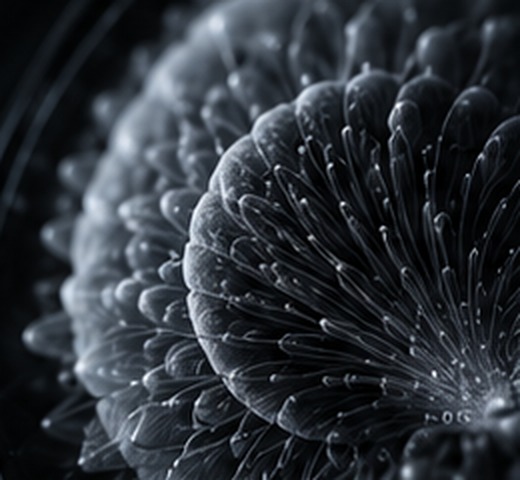
The most sophisticated learning machine on Earth weighs about a kilogram and a half, runs on roughly twenty watts, repairs itself continuously, and was designed by no one. It is sitting between your ears. Every artificial intelligence system built to date is, in one way or another, an attempt to reproduce a fraction of what it does — using millions of times more energy to get there.
That comparison used to be a rhetorical flourish. It is becoming an engineering agenda. Across a scattered set of laboratories, a new field is forming at the boundary of artificial intelligence and biology, and its central claim is simple: the next intelligence will not be built only in silicon. It will be grown, evolved, and engineered in living matter, and it will be shaped by the same tools that are transforming software.
Reading the notes
Start with the tools. In 2021, a deep learning system predicted the three-dimensional structures of proteins with an accuracy that had eluded biologists for half a century. The consequences of that single result are still unfolding, but its symbolic weight was immediate: machine learning had become a first-class instrument of biology, on par with the microscope and the sequencer.
Since then, the traffic between the two fields has become two-way. Models now propose new proteins that have never existed in nature, and laboratories synthesise them. Generative systems design genetic circuits, regulatory sequences, and enzymes. What used to take a doctoral thesis to discover can be proposed on a Tuesday and tested by Friday.
Evolution spent four billion years learning how to build a learner. We are only now learning how to read the notes.
Cells that decide
The second strand is older, and stranger. Synthetic biologists have spent two decades learning to build logic into cells — genetic switches that turn on in the presence of one signal and off in the presence of another, feedback loops that keep a process stable, circuits that count. Individually, these are modest. Together, they amount to something like a programming language for living systems.
The immediate applications are not computers. They are therapies: engineered immune cells that recognise a tumour by a combination of markers rather than a single one, probiotic bacteria that sense inflammation and respond, cellular sensors that report on conditions deep inside the body. What these share is a shift in what a therapy is — from a molecule that does one thing to a system that senses, decides, and acts.
Intelligence in a dish
The third strand is the most provocative. Researchers have grown small three-dimensional cultures of human neural tissue — organoids — and shown that they can be interfaced with electrodes, stimulated, and, in some experiments, trained to respond in ways that look like rudimentary learning. A 2023 paper gave the emerging field a name, organoid intelligence, and, crucially, published an ethics framework alongside the research agenda.
It is important to be precise about what this is and is not. These are not miniature brains. They do not think, feel, or experience. They are small, disorganised tissues that exhibit some of the electrical properties of neural circuits. The interest lies in what they might teach us about how biological networks learn so efficiently, and in whether that efficiency can eventually be harnessed. The ethical questions — about moral status, consent, and where a line should be drawn — are being asked early and in public, which is exactly how this should go.
Why biology, and why now
Three reasons this convergence is happening now rather than in a decade.
Energy. The energy cost of training and running large models has become a first-order constraint. Biology's efficiency is no longer an academic curiosity; it is a benchmark that the field cannot ignore.
Embodiment. Intelligence in the world needs sensing, actuation, and repair. Biological systems do all three natively. The most capable robot ever built cannot heal a scratch.
Tools. The instruments for reading, writing, and modelling living systems have crossed a threshold of speed and cost that makes iterative engineering practical. Biology has become, for the first time, a discipline in which you can try things.
What to be careful about
Fields that move this fast attract claims that outrun evidence. The literature on organoid learning is small and its results are preliminary. Engineered cell therapies work in some indications and fail in others, and the failures are instructive. AI-designed proteins are extraordinary, but designing a molecule is not the same as delivering a medicine.
Neurazine will cover this field with those caveats attached. The story of biological intelligence is genuinely one of the most important of the century. It will be told better if it is told carefully.
A brain runs on roughly the power of a dim light bulb. Understanding how biology achieves that is the most promising route to intelligence that is efficient, embodied and repairable.
Expect the boundary between AI and biology to blur: models that design molecules, molecules that implement logic, and neural tissue used as a computational substrate under strict ethical oversight.
This feature draws on the published literature in synthetic biology, organoid research and protein design. Specific quantitative claims are avoided where the literature is unsettled.
- Highly accurate protein structure prediction with AlphaFold — Jumper et al., Nature (2021) · doi:10.1038/s41586-021-03819-2
- Highly accurate protein structure prediction with AlphaFold — Jumper et al., Nature (2021) · doi:10.1038/s41586-021-03819-2
- Organoid intelligence (OI): the new frontier in biocomputing and intelligence-in-a-dish — Smirnova et al., Frontiers in Science (2023) · doi:10.3389/fsci.2023.1017235
- Organoid intelligence (OI): the new frontier in biocomputing and intelligence-in-a-dish — Smirnova et al., Frontiers in Science (2023) · doi:10.3389/fsci.2023.1017235
Produced by the Life Desk of Neurazine, an Abstract Sight Press publication. Researched and drafted with AI systems, checked against sources, and approved by Jesse Marcel, Editor of Record. How Neurazine is made.